
Introduction
Hair loss is more common than most people realise, and deciding between FUE and FUT can feel confusing without clear guidance. Both methods have restored confidence for countless patients, but they work quite differently in terms of technique, recovery, and results. If you are looking for the best hair transplant clinic in Kerala, understanding these two approaches will help you have a more informed conversation with your surgeon. This guide breaks down everything you need to know before booking your consultation, from how each method works to who each one is best suited for.
Key Takeaways
- FUE (Follicular Unit Extraction) extracts individual follicles without a linear incision, making it ideal for patients who prefer shorter hairstyles and want minimal scarring.
- FUT (Follicular Unit Transplantation) removes a strip of scalp tissue and is better suited for patients with advanced hair loss who need a higher graft count in a single session.
- The right method depends on your hair loss pattern, scalp condition, lifestyle, and the clinical assessment of an experienced hair transplant surgeon.
What Is FUE? Understanding Follicular Unit Extraction
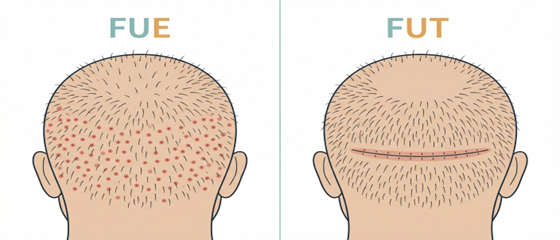
FUE is a technique that extracts individual hair follicles from the donor area without removing any strip of skin, leaving tiny scattered scars that are virtually invisible once hair grows back.
During an FUE procedure, the surgeon uses a precision micro-punch tool to harvest individual follicular units, one at a time, from the back or sides of the scalp. These units are then carefully implanted into thinning or bald areas. Because no linear incision is made, the small round extraction sites heal quickly and are effectively hidden by surrounding hair. Most patients undergoing FUE can return to light activity within three to five days. The procedure is especially well suited to patients who want to wear their hair short, those with a flexible scalp, or those who need a smaller number of grafts. FUE is also the method of choice for targeted procedures such as eyebrow and beard transplantation.
What Is FUT? Understanding Follicular Unit Transplantation
FUT, also called the strip method, involves surgically removing a narrow strip of scalp from the donor area, which is then dissected into individual follicular units for implantation.
In a FUT procedure, a surgeon removes a strip of tissue from the back of the head under local anaesthesia. A team of technicians then dissects this strip under magnification into individual follicular units. The donor area is closed with sutures, which does leave a linear scar that can be concealed by the surrounding hair. Because the strip harvesting method allows for a larger quantity of grafts in one session, FUT remains the preferred approach for patients with advanced or extensive hair loss. The follicular units obtained through FUT are often handled with minimal manipulation during preparation, which is considered by many surgeons to support strong graft survival rates. Recovery takes slightly longer than FUE, and some patients experience more post-operative tenderness in the donor region for a week or two.
FUE vs FUT: Key Differences That Affect Your Choice
Both methods produce natural-looking, long-lasting results when performed by a skilled hair transplant surgeon in Trivandrum. The differences below will help you identify which technique aligns with your priorities.
Factor | FUE | FUT |
Scarring | Tiny dot scars across donor area | Single linear scar at back of head |
Graft yield per session | Moderate (ideal for smaller areas) | Higher (better for large bald zones) |
Recovery time | 3 to 5 days for most patients | 7 to 14 days in most cases |
Post-op discomfort | Minimal | Slightly more at donor site |
Hair styling freedom | Can wear very short hair | Longer styles conceal the scar better |
| Cost per session | Generally higher per graft | Often more cost-effective for larger sessions |
Before your appointment, it is worth reviewing the 10 questions to ask before starting your hair transplantation surgery so you arrive at the consultation fully prepared to make the right decisions.
Who Is the Right Candidate for Each Method?
Choosing between FUE and FUT is not simply about preference. Your suitability for each technique depends on a combination of physical factors that your surgeon will evaluate during a clinical assessment.
FUE tends to be the better fit for patients with mild to moderate hair loss, those who prefer very short hairstyles, individuals with a flexible scalp, and those seeking targeted procedures such as beard or eyebrow restoration. It is also a practical option when only a small number of grafts are needed. FUT is more commonly recommended for patients at a more advanced stage of hair loss who need maximum coverage in a single session. Patients with a tighter scalp may also be better candidates for FUT, as the technique does not rely on individual follicle extraction from a potentially resistant donor area. According to the International Society of Hair Restoration Surgery, both FUE and FUT can deliver excellent outcomes when patient selection is appropriate and the procedure is performed by a trained specialist. For a broader overview of your options, read our basic guide to choosing the ideal type of hair transplant before your consultation.
Why Choosing the Best Hair Transplant Clinic in Kerala Matters
The technique matters, but the clinic and surgeon behind it matter just as much. The outcome of your hair transplant is directly tied to the quality of the clinical team, the equipment available, and the standard of aftercare you receive.
Cosmetiq Hospital in Trivandrum is led by Dr. Bibilash Babu, who holds an MCh in Plastic Surgery from JIPMER and a DAFPRS Fellowship in Aesthetic Plastic Surgery from Ghent, Belgium. He is a Fellow of the American College of Surgeons and a Member of the Royal College of Surgeons, Edinburgh, with 34 published papers in national and international journals. At the best hair transplant clinic in Kerala, patients receive a thorough scalp evaluation, a transparent discussion of which method is clinically appropriate, and a structured treatment plan tailored to their hair loss pattern. The clinic also offers Growth Factor Therapy with Platelet as a complementary option for patients looking to support their surgical results with proven non-surgical care. Post-procedure care is equally important to your final outcome. Knowing the 5 things to avoid right after your hair transplantation can make a significant difference to how well your grafts settle and grow.
Conclusion
Both FUE and FUT are proven methods for restoring hair, and neither is universally better than the other. The right technique depends on your stage of hair loss, scalp characteristics, lifestyle, and the guidance of a qualified surgeon. What matters most is taking the first step with a clinical team that will assess your unique situation honestly and recommend the most suitable approach. If you are considering hair restoration in Kerala, contact Cosmetiq Hospital to book your consultation and begin your journey toward renewed confidence.
FAQ
Q1: What is the difference between FUE and FUT hair transplant?
Answer: FUE extracts individual follicles one at a time, leaving tiny dot scars. FUT removes a strip of scalp tissue to harvest more grafts per session. The right technique depends on your hair loss stage, scalp type, and lifestyle preferences.
Q2: Which hair transplant method leaves less scarring, FUE or FUT?
Answer: FUE leaves tiny dot scars that become virtually invisible once surrounding hair grows back. FUT results in a linear scar that longer hairstyles can conceal. Patients who want minimal visible scarring are generally better suited to the FUE technique.
Q3: How do I find the best hair transplant clinic in Kerala?
Answer: Look for a clinic led by board-certified plastic surgeons with verifiable credentials and documented patient outcomes. A clinic that offers both FUE and FUT, uses modern equipment, and performs thorough pre-operative assessments is a reliable indicator of clinical quality.
Q4: How long does recovery take after an FUE hair transplant?
Answer: Most FUE patients can return to light activity within three to five days. The transplanted follicles begin settling within two weeks, and visible new hair growth typically appears between three and six months after the procedure is completed.
Q5: Is FUT better than FUE for advanced hair loss?
Answer: FUT is often preferred for advanced hair loss because it allows a higher graft count in a single session. For patients with large bald areas requiring maximum coverage, FUT can deliver more comprehensive results than FUE in one sitting.
Q6: How many grafts can be transplanted in a single FUE session?
Answer: A single FUE session can typically yield between 1,500 and 3,000 grafts depending on donor area density and the extent of hair loss. Your surgeon will assess your scalp during a consultation to determine a safe and realistic target.
Q7: Can I get a beard or eyebrow transplant using FUE?
Answer: Yes. FUE is well suited to beard and mustache transplantation because precise follicle placement leaves no visible scarring at the donor site. The same technique is used for eyebrow restoration, making it a versatile option for facial hair procedures.
Q8: What is the success rate of hair transplants in Kerala?
Answer: Hair transplant outcomes depend on surgeon expertise, graft handling, and post-operative care. Both FUE and FUT deliver lasting, natural-looking results when performed by a qualified hair transplant surgeon who follows evidence-based protocols throughout the entire procedure and recovery period.
Q9: What should I expect during a hair transplant consultation in Trivandrum?
Answer: A hair transplant surgeon in Trivandrum will evaluate your scalp density, donor area quality, and hair loss pattern. The consultation covers technique suitability, realistic outcome expectations, and any pre-operative steps you need to take before the procedure date.
Q10: Are there non-surgical alternatives to hair transplant surgery in Kerala?
Answer: Yes. Options such as Growth Factor Therapy with Platelet, low-level laser therapy, and scalp micropigmentation can address hair thinning without surgery. These treatments are often used alongside transplant procedures to support overall scalp health and improve density over time.